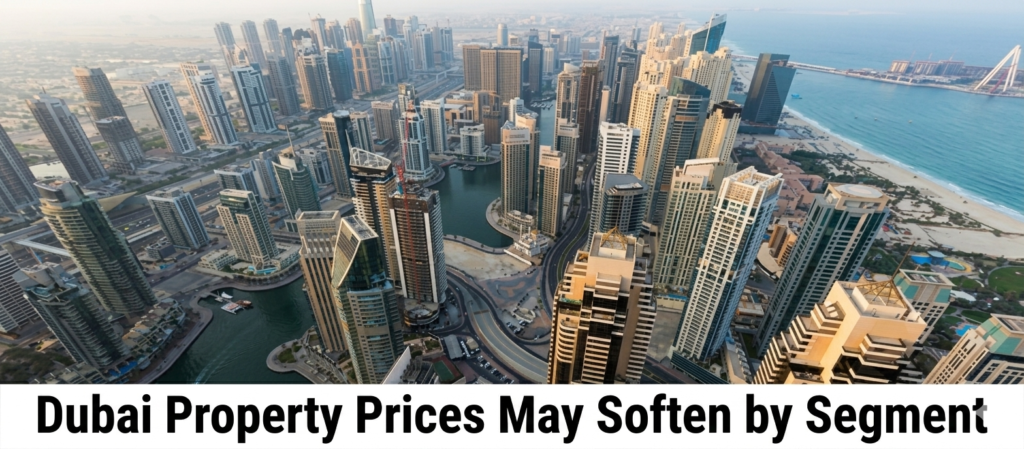
Dubai’s real estate market is in constant flux, and Dubai Property Prices May Soften by Segment showcases this ongoing change. Price trends are anticipated to differ across various property types and neighborhoods, indicating the market won’t shift uniformly. While certain sectors may see minor adjustments, others are expected to maintain stability or possibly experience growth. This diversity underscores the sophistication and resilience of Dubai’s property landscape.
Strong Market Performance in Early 2026
The property market in Dubai has recorded remarkable performance in the first quarter of 2026, as it reflects the confidence of the investors. The market registered almost 48,000 deals with a cumulative value of Dh176.7 billion. This performance shows a gradual growth in the volume of transactions and the total value in comparison to the last year.
Further, this expansion suggests that the demand is robust in spite of uncertainties that are experienced in other markets across the globe and the region. Dubai is still considered by buyers as a safe and appealing location to invest in property. Consequently, the market continues its flow and adjusts itself to various segments naturally.
Why Dubai Property Prices May Soften by Segment?
Dubai Property Prices May Soften by Segment is based on the principle of the heterogeneity of supply and demand dynamics. Analysts stress that the market cannot be perceived as a unified trend of prices of all types of property. Rather, every segment responds differently in response to various factors like inventory, location, and buyer demand.
As an illustration, when there is a high number of apartments of the same type in an area, the price can be more sensitive. Raising the supply, sellers might be forced to change the prices in order to compete. Conversely, scarcity in a few segments may serve to sustain or even appreciate the value of property with time. As such, buyers and investors interested in making informed decisions need to be aware of such differences.
Supply Trends Shaping Market Behavior
The distribution of supply contributes significantly to the performance of the market in different segments. This category is very competitive as a great percentage of future developments in Dubai comprise apartment units. Townhouses and villas, on the other hand, constitute a considerably smaller portion of the total pipeline.
This disequilibrium generates various price pressures in property types. The Dubai apartments in high-density communities will be more competitive, which can result in possible price changes. Villas and townhouses, on the contrary, enjoy the advantage of a comparatively low supply that contributes to their stability in terms of value.
Apartments vs Villas and Townhouses
In Dubai, apartments are the most common form of property, thus more susceptible to fluctuations in the market. When a high supply is new, and the community has a high number of buyers, the latter can have a greater number of options that can affect pricing. Consequently, there might be slight softening in apartment prices in certain areas.
Villas and townhouses, on the other hand, are more resilient as there are not many and there is always demand. These properties are usually long-term living and investment properties for buyers. Moreover, the villa community has features that can hardly be duplicated in the new development. Townhouses are also gaining a larger base of buyers who desire a perfect balance between price and space. This need helps them to be stable even when the market is generally adjusting.
Emerging Developments Driving Growth
New project launches continue to play an important role in shaping Dubai’s real estate landscape. Residential communities are being developed thoughtfully and respond to the changing tastes of buyers. These projects emphasize functionality, modern designs, and features that support a good lifestyle. For example, new developments in emerging districts show the city’s growth beyond traditional residential areas. These regions benefit from improved infrastructure, connectivity, and easy access to major facilities. Consequently, they appeal to investors and long-term value seekers, the end-users.
Investor Confidence and Market Stability
Although some price changes may be made in some segments, the general investor confidence in Dubai is high. The stable economy, clarity in regulations, and investor-friendly atmosphere of the city still present international interest. These aspects provide a strong basis for expansion in the real estate industry over the long term.
In addition, Dubai has the capacity to adjust to the evolving market conditions, which is a sign of resilience and maturity of the city. The market does not experience drastic changes but gradual changes that contribute to balancing. This will provide long-term sustainable growth.
Key Advice for Property Sellers
The sellers in a dynamic market have to be strategic in order to come up with successful results. They ought to look at pricing precision and effective marketing strategies instead of depending on external factors. The selection of the appropriate real estate professional is also essential in the maximization of property value.
A knowledgeable and experienced broker may also be helpful to work with because they may offer insights into the market trends and buyer behavior. Exclusive listings can provide a higher degree of control over the pricing and negotiation. This method assists sellers in reacting quickly to demand and competition alterations. Also, quality listing and professional marketing of the properties make them more attractive to a potential buyer.
Market Maturity and Future Outlook
The concept of Dubai Property Prices May Soften by Segment is a natural stage of the development of the market. Instead of a recession, this trend shows a change to a more balanced, mature real estate environment. This type of adjustment is typical in the developed markets and tends to result in greater growth cycles. Short-term changes can bring about uncertainties, but it is also a chance to make strategic investments. In some segments, buyers can enjoy competitive pricing, and they can optimize their strategies to suit the market conditions.
Conclusion
The property market in Dubai is at a stage where there is no overall trend, but performance in the various segments is variable. This change in the direction of a more sensitive and balanced market structure is expressed in the idea Dubai Property Prices May Soften by Segment.
Even when apartment prices shift in oversupplied zones, villas and townhouses tend to hold steady. Backed by consistent buyer interest, confidence from investors, and ongoing projects, the market stays firm. Such patterns help those buying, selling, or investing to decide clearly. With lasting promise and diverse options, Dubai continues drawing attention in property markets.