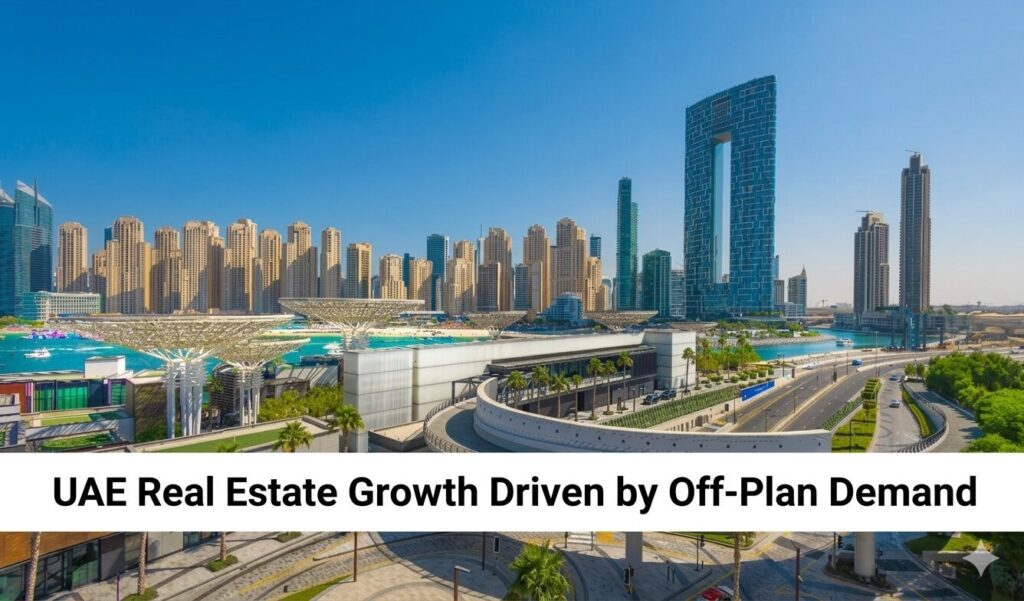
The UAE real estate market started 2026 with strong momentum, supported by consistent demand and limited supply. Despite global uncertainties, the sector maintained stability due to resilient fundamentals and investor confidence. Additionally, tight supply conditions across key segments helped sustain pricing levels and overall market performance. As a result, developers and investors continued to view the market as a reliable long-term opportunity.
Supply Constraints Continue to Support Market Stability
Scarcity of quality assets was important in ensuring growth in the key emirates. Specifically, grade A office space and industry buildings were still scarce during the quarter. In turn, this mismatch between demand and supply underpinned prices of rentals and occupancy rates in central areas. Besides, investors also reacted well to such conditions, which further builds confidence in the structural soundness of the sector.
Macroeconomic Factors Provide Additional Support
Even though the analysts adjusted the economic growth prospectus slightly, the overall perspective was favorable to real estate activity. Good liquidity buffers and stable inflation levels contributed to the stability of the financial markets in the region. In addition, active governmental regulations still promoted investment inflows and cushioned the economic stability. The combination of these factors provided an appropriate basis for long-term growth in the property industry.
Office Segment Shows Exceptional Performance
The segment of the commercial office has turned out to be one of the highest-performing in the market at the beginning of 2026. The high-quality office space remained in demand and surpassed the supply, especially in central business districts. As a result, there was a valuation of rental prices, and occupancy levels were also very high in both major cities. Although there were companies that postponed their expansion plans, there was consistent demand for premium workspaces overall.
Moreover, the office market in Abu Dhabi showed even more restrictive conditions, as almost all prime developments were almost fully occupied. The few new entries of supply in the market before 2027 will keep the pressure on rental rates upwards. Hence, investors and developers are recommended to pay more attention to the premium office development in the future.
Residential Sector Moves Toward Sustainable Growth
The residential sector exhibited indications of slow normalization following a few years of glaring growth and price increase. Nonetheless, the volumes of the transactions were high, which indicated the sustained level of interest by buyers and strong demand. Interestingly, the significant contributor to residential activity in this time was off plan properties uae. New projects that were launched were of great interest to buyers, especially in the mid-market and emerging communities.
The growth of prices was reduced to more sustainable rates, which shows a balanced adjustment rather than a market adjustment. Equally, rental increases were no longer growing, indicating the capacity to afford and survive in the long run in the sector. Consequently, both end-users and long-term investors in search of stable returns remained in the uae real estate market.
Dubai Market Trends Reflect Balanced Expansion
The trend of the real estate market in Dubai has pointed to the shift of the trend away from the boom growth towards stable and sustainable growth. Although the change in sentiment of the investors was slight during the geopolitical tension, the total demand showed no significant variations. Moreover, international consumers still expressed the best interest in long-term prospects of Dubai.
In response, developers came up with new projects that would respond to changing customer preferences and their income levels. This was a strategy of sustaining the volumes of transactions and market stability in the long run. Dubai therefore, continued to play a decisive role in the development of the national property environment.
Abu Dhabi Sees Growth in Premium Developments
The dubai real estate market trend has pointed to the shift of the trend away from the boom growth towards stable and sustainable growth. Although the change in sentiment of the investors was slight during the geopolitical tension, the total demand showed no significant variations. Moreover, international consumers still expressed the best interest in the long-term prospects of Dubai.
In response, developers came up with new projects that would respond to changing customer preferences and their income levels. This was a strategy of sustaining the volumes of transactions and market stability in the long run. Dubai therefore, continued to play a decisive role in the development of the national property environment.
Hospitality Sector Builds on Tourism Growth
The hospitality industry continued to perform well after registering record tourism figures in the last year. Massive visitor numbers helped in high occupancy rates as well as growth in revenues in key hotel markets. Additionally, operators were quick to change their approach to the evolving trends in travel, as these operators specialized in domestic tourism and stay options on a short-term basis.
This elasticity aided in maintaining the occupancy rates even when the level of international travel activity was low. With tourism still on its way back, the hospitality industry is likely to be a major contributor to overall real estate performance.
Retail Sector Remains Stable Despite Challenges
Retail real estate proved to be resistant to changes in consumer behavior and short-term fluctuations in tourist activity. Shopping hot spots had good occupancy rates, indicating there was high demand in both the domestic and foreign brands. New retail concepts and expansions were also aiding continued growth in the sector.
Though there were some pressures on the short-term retail sales, the long-term outlook is promising because of population growth and increasing consumer spending. As a result, assets of retail remain a subject of investor interest in uae real estate market.
Logistics and Industrial Assets Lead Growth
The performance of industrial and logistics properties became one of the best-performing categories because of a growing demand and scarcity of supply. Corporations diversified more in their distribution channels in order to deal with international supply chain issues and regional trade changes. This led to a great demand for modern warehousing facilities within major logistics hubs.
The segment showed rental growth, and it has been boosted by the ongoing infrastructure and supply chain resilience investments. Besides, the enterprises focused on regional storage and production of goods and enhanced the industrial assets needed, continuing to boost the demand. The trend is indicative of the increasing role of logistics in the overall property market.
Investment Outlook Remains Positive
In the future, the future of property investment in uae is very promising as the economic fundamentals are good. To the investors, the market is still perceived to be an attractive long-term capital allocation destination that is viewed as safe and stable. In addition, infrastructure development projects and government efforts also increase the attractiveness of the market.
With improved global economic conditions, the UAE will enjoy the benefits of an influx of investments and enhanced trade. This would probably aid the further development of all capstone segments of the real estate in the years to come.
Conclusion
Generally, the uae real estate sector proved to have robust resilience in the first quarter of 2026, against externalities. Supportive economic policies, tight conditions of supply, and high off-plan demand for apartments contributed to the growth. Moreover, the healthy growth in residential, commercial, and industrial sectors puts emphasis on the long-term stability of the market.
The sector has been well placed to continue its growth with this future, as new investors continue with confidence and the strategic development efforts being implemented in the sector. Consequently, UAE is still making a name as a prime real estate investment destination in the world.