
Waterfront Apartments for Sale in Dubai
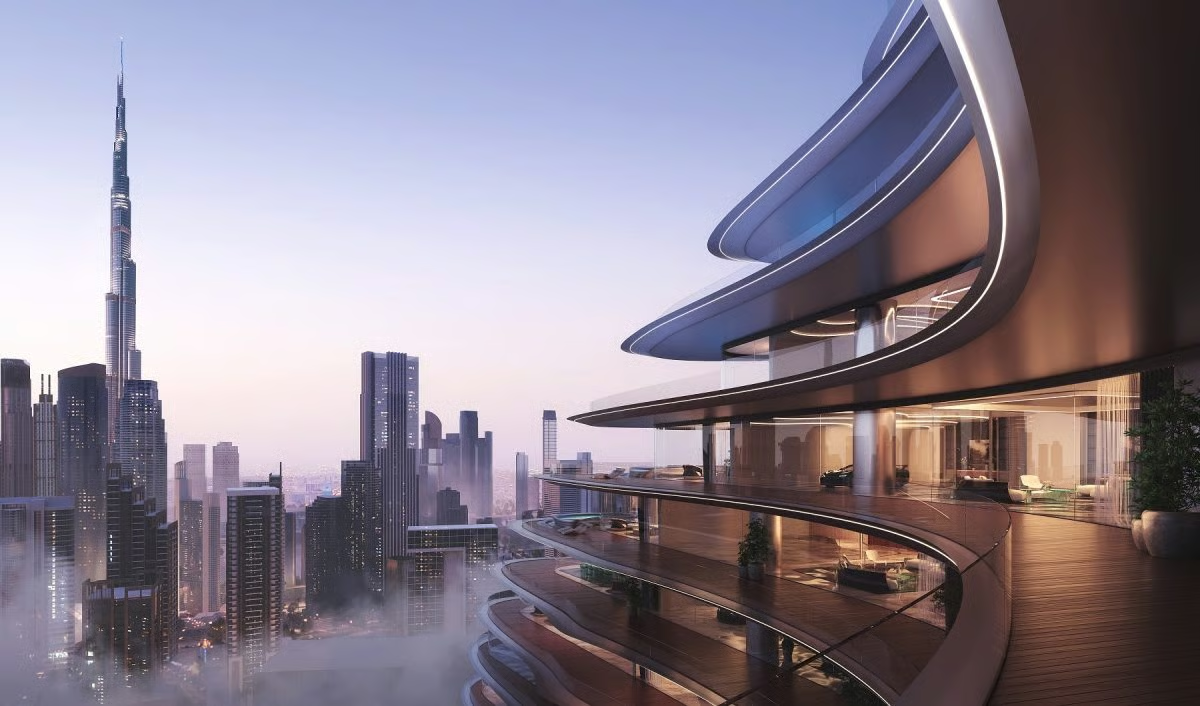

BOOK AN APPOINTMENT
Why Dubai's Coastline Keeps Pulling Buyers Back
Property investment research has a way of circling back to the same place eventually. For a lot of people right now, that place is Dubai’s coastline. Not because of hype, though there’s plenty of that floating around too, but because something has actually shifted in how people think about where to live and where to put money.
Stand on the Dubai Marina promenade some evening. Doesn’t matter which one. Yachts sitting still in the dark water. Restaurant terraces spilling onto the walkway. Joggers cutting past families out for a walk. Those towers catching the last gold light before the sun disappears into the Gulf. None of it happened by accident, every piece of this was planned and built. But it doesn’t read that way when you’re standing in it. It reads like a place that was always here, and you’re just late to it.
What Buyers Are Actually Buying
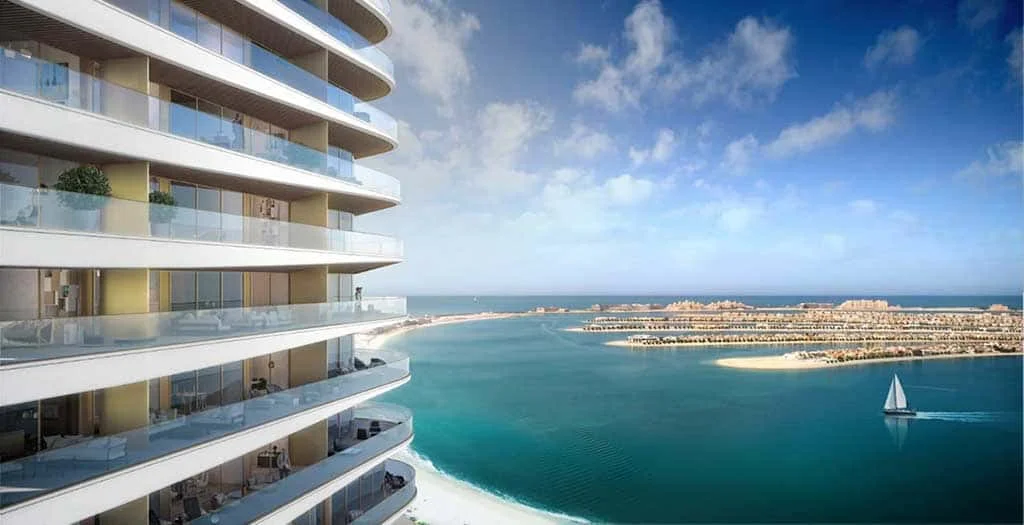
That’s the pull, in a sentence. Buyers land here from Karachi, from London, from Singapore, and they’re not really buying square meters. They’re buying a certain closeness to water, a rhythm to daily life that’s hard to replicate, and an asset that tends to hold its ground when things elsewhere get shaky.
Two Very Different Kinds of Buyers
Some buyers want to relocate outright, pack a bag, move into a tower on Palm Jumeirah, call it home. Others want a property that quietly earns money while they live somewhere else entirely. Dubai’s coast has room for both. Dubai Marina sits on one end, fully mature, proven, boring in the best sense. Dubai Islands sits on the other, still raw, still being built out, riskier but with more upside baked in. Everything else falls somewhere between.
What This Guide Covers
What follows isn’t a sales pitch. It’s community by community, price bracket by unit size, yield numbers, paperwork, and the questions buyers always end up asking around their third or fourth viewing. There’s always a third or fourth viewing.
So, why waterfront specifically. Not just any Dubai apartment.
Read more
Why Buy Waterfront Apartments in Dubai?
Water views cost more everywhere. London’s Thames-side flats. Miami’s oceanfront condos. Sydney’s harbour homes. It’s not just that water looks nice from a balcony, though it does. Water access is tied to something that can’t be manufactured. Dubai pushes this harder than most cities, because unlike a lot of coastal cities that just grew organically, this coastline was drawn up on purpose.
It Feels Like a Permanent Holiday, Mostly
Ask someone who’s actually lived in one of these towers what they notice first. Usually it’s mornings. Sunlight bouncing off water hits differently than sunlight bouncing off concrete, and a surprising number of buildings are engineered around exactly that feeling. Private beach access. Pools angled so the water seems to run into the horizon. Courtyards. A five-minute walk to a café strip you didn’t plan on visiting daily but somehow end up at anyway.
It’s not only the view either. These neighborhoods are walkable in a way most of Dubai simply isn’t. No fifteen-minute drive for coffee. Yacht clubs, jogging tracks, playgrounds, all sitting inside the community footprint. That’s probably the real reason people who move to the coast rarely move back inland. More than the view, if I’m being honest.
The Rental Math Genuinely Checks Out
Surprising thing for first-time buyers: waterfront units rent faster and at better rates than comparable inland stock. Makes sense once you look at who’s renting. Finance, tech, hospitality professionals make up a big chunk of the tenant base, plus a steady flow of tourists booking short stays. Both want the same thing. Proximity to water.
Short-term holiday lets do especially well in beachfront and marina pockets. Tourists pay a premium for a sea view and a five-minute walk to sand. That’s the product, basically.
Land Just Doesn't Grow Back
This is the part serious money cares about. You can keep building inland practically forever, there’s no shortage of desert. But coastline is fixed. Once a stretch gets developed, it’s spoken for, permanently. That fixed supply is a big reason established waterfront communities appreciate faster than similar stock a few kilometers inland. Nobody’s launching a “coastal extension” the way they’d launch a new inland district. There’s nowhere left to put one.
Supply Really Is Limited
Worth saying again because it’s easy to forget: coastal land is finite in a way inland land isn’t. That protects resale values in the mature communities especially, since buyers are competing over a pool of real estate that keeps shrinking rather than growing.
What Are Waterfront Apartments?
The term “waterfront” gets thrown around loosely by agents and developers, and it trips buyers up more than you’d think. There are really five distinct categories here.
Beachfront Apartments:
What most people picture first when they hear “waterfront Dubai.” Direct beach access, open sea views, sand two minutes from the lobby. Palm Jumeirah and Emaar Beachfront own this segment.
Marina Front Apartments:
These overlook working marinas rather than open beaches. Dubai Marina is the reference point for the whole category at this point. Livelier, more urban, boats gliding past your balcony.
Canal Front Apartments:
A different animal. These sit along engineered waterways rather than the sea. Business Bay along the Dubai Water Canal is the clearest example. You trade beach access for central location, and for a lot of working professionals, that’s an easy trade.
Creek Front Apartments:
Dubai Creek Harbour basically owns this category. It sits along the historic creek, close to Downtown, and appeals to buyers who want quiet without giving up city access.
Harbour Front Apartments:
The newest and most ambitious category. Dubai Harbour and Rashid Yachts & Marina fall here, deep-water marinas built for serious yachts, still a fairly new identity for the city.
Best Waterfront Communities in Dubai to Buy an Apartment
Most of the real decision-making happens at this level. Unit type matters, sure. But the community shapes daily life, and it determines how easily you’ll sell or rent five years out.
Dubai Marina
If Dubai’s waterfront has a flagship, this is it. Over 200 residential towers wrapped around a 3.5-kilometer stretch of marina. One of the most recognized waterfront addresses anywhere, not just regionally.
What separates Marina from newer projects is maturity. This isn’t a community still finding its footing, it’s been running at full capacity for years. Metro access, the Marina Walk, hotels, restaurants everywhere. For investors, the draw isn’t just lifestyle, it’s liquidity. This is one of the most active resale markets in the UAE. Exit whenever you need to.
Palm Jumeirah
Shows up on more postcards than practically anything else in the country. The city’s single most iconic address, no real competition there. An artificial island shaped like its name, apartments with private beach access and views over the Arabian Gulf.
Close to some of the best resorts and restaurants in the city, beach clubs that feel built specifically for this. A lot of units also come with skyline views back toward Marina or the Burj Al Arab. This is where buyers chasing pure exclusivity land. You’re paying a real premium, but for something that genuinely has no substitute elsewhere.
Dubai Harbour
Sits between Palm Jumeirah and Bluewaters Island. One of the region’s largest marinas anchors it.
What’s interesting is the positioning. Not purely residential, more of an actual hub for Dubai’s yachting scene. Apartments pair marina views with newer architecture. For buyers who don’t want to fully commit to either “beach” or “marina,” this tries to split the difference. Results vary depending on the building and the view, worth saying plainly.
Emaar Beachfront
Private island living, minus the actual private island. Sits inside Dubai Harbour, delivers roughly what the name promises, towers surrounded by private beach and waterfront walkways.
Direct beach access plus solid connectivity to Marina and Sheikh Zayed Road, so despite the resort feel, you’re not cut off from the rest of the city. Emaar’s brand carries real weight here, and that trust tends to show up as steadier demand than a lesser-known developer would get running the same concept.
Dubai Creek Harbour
Where sustainability actually meets modern waterfront living, rather than just being brochure language. A sprawling master-planned community along Dubai Creek, with green spaces, promenades, and towers still multiplying as the project matures.
Underrated part: the views. Plenty of units look straight at the Downtown skyline. For buyers who care about nature, and more do than you’d guess, the neighboring Ras Al Khor Wildlife Sanctuary keeps the whole area calmer and greener than most of built-up Dubai.
Bluewaters Island
A bit of an outlier, and that’s the whole point of it. Sits beside Jumeirah Beach Residence, linked to the mainland by a dedicated pedestrian bridge. Manages to feel private and urban at once, shouldn’t really work, but it does anyway.
Buildings here run low-rise and spacious, a real change from Dubai’s usual high-rise habit. Panoramic sea views without being stacked thirty floors up. Restaurants and retail within walking distance. Inventory has always stayed limited, which has built Bluewaters a reputation for holding value, not many units hit the market at once.
Dubai Islands
If Palm Jumeirah is the past and present of Dubai’s waterfront, this is arguably the future. An ambitious project turning five separate islands into one connected coastal destination. Resorts, golf courses, retail, public beaches.
The appeal for investors is simple: it’s early. Development is rolling out in phases, so buyers now are paying launch-stage prices for something that hasn’t matured yet. Bigger gamble than Dubai Marina, which is a known quantity at this point. But for buyers with patience and a longer horizon, that’s the pitch. Also shaping up to be far more family-friendly than some of the nightlife-heavy communities. Wide beaches, open parks, actual room to breathe.
Business Bay
Proves waterfront living doesn’t require a beach. Dubai’s commercial core, one of its busiest districts, canal-front apartments lining the Dubai Water Canal minutes from Downtown.
What draws people here isn’t a beach club, it’s convenience. Boardwalks, canal-side dining, cycling tracks, water taxis, all wrapped around proximity to the financial district. Corporate tenants and young professionals gravitate here for exactly that reason, so rental demand stays fairly steady year-round rather than swinging with tourist season.
Rashid Yachts & Marina
Leans into Dubai’s maritime history while wrapping it in a modern residential shell. Built around a marina designed for mega yachts, towers positioned to take advantage of the views.
Promenades, upscale dining, landscaped parks, all benefiting from Emaar’s broader planning across the area. Buyer interest has kept climbing as infrastructure expands. Still building momentum here rather than having peaked already, worth factoring in for anyone thinking long-term.
Dubai Maritime City
For buyers who want waterfront exposure without waterfront-level pricing, this tends to come up quickly. Newer, still developing, and with a genuinely lower entry point than Palm Jumeirah or Emaar Beachfront.
That affordability doesn’t sacrifice the basics. Waterfront views, modern infrastructure, just without the premium name attached. For investors chasing higher yields relative to purchase price, worth a serious look, mostly because entry cost is lower while the growth story is still being written.
Which Waterfront Neighborhoods in Dubai Are Most Desirable?
There isn’t one single “best” answer here. Depends entirely on what you actually want out of the purchase.
Exclusivity and prestige point straight to Palm Jumeirah, not much competition there. Easy to rent, easy to resell, backed by proven demand, that’s Dubai Marina, arguably the safest pick on the whole list. Emaar Beachfront suits buyers who want private beach access without Palm Jumeirah’s price ceiling. Dubai Creek Harbour is for the quieter crowd, drawn to green space and sustainability, with a genuinely strong skyline view thrown in.
Business Bay fits professionals who want proximity to work without giving up a waterfront address. Dubai Islands is for buyers comfortable with more risk in exchange for early pricing and long-term upside. Dubai Maritime City rounds things out as the more budget-conscious entry point.
None of these are wrong picks. Different strategies wearing the same waterfront label, and choosing between them says more about your own goals than about the actual real estate.
Waterfront Apartment Prices in Dubai
This is usually where the real conversation starts. After the lifestyle pitch and community comparisons, buyers want numbers, fair enough. Prices swing a lot depending on location, developer, floor level, and whether you’re looking at a canal view or a full sea view. Branded residences tend to sit higher too, mostly because buyers pay extra for the name on the building. Smart branding or unnecessary markup, depends who you ask.
Good news: this market isn’t reserved for unlimited budgets. Wide range here, from studios a first-time investor can realistically manage, all the way to penthouses in a completely different financial category.
Studio Apartments
Entry point into this market. Generally AED 900,000 to AED 1,500,000, sizes running 400 to 600 square feet. Most sit in Business Bay Canal, Dubai Marina, and Dubai Maritime City.
These move fast. Investors wanting in without committing huge capital snap them up quickly. Young professionals and business travelers make up a big share of Dubai’s rental pool, so studios rent reasonably well despite the small footprint. Not glamorous. They do the job.
1 Bedroom Apartments
The sweet spot for a lot of buyers. Enough space to live comfortably, still within reach for a decent range of investors. Roughly AED 1,400,000 to AED 2,800,000, sizes between 700 and 950 square feet. Dubai Marina, Dubai Creek Harbour, Rashid Yachts & Marina, Emaar Beachfront all offer solid stock here.
Attracts couples, young professionals, overseas investors balancing affordability with rental appeal. Resale stays active too, since one-bedroom demand rarely dries up. Probably the most forgiving size to buy into.
2 Bedroom Apartments
Families and longer-term residents gravitate here, pricing reflects it. Typically 2,400,000 AED to 5,200,000 AED, 1,100 to 1,600 square feet. Emaar Beachfront, Palm Jumeirah, and Dubai Harbour are the go-to picks.
Nice middle ground. Spacious enough for a small family, still positioned in some of the more desirable waterfront addresses. Not cheap, but not unreasonable given what you get.
3 Bedroom Apartments
Solidly luxury territory now. 4,200,000 AED to 9,500,000 AED, 1,800 to 2,600 square feet. Palm Jumeirah, Bluewaters Island, Emaar Beachfront dominate here.
Specific buyer profile: executives, larger families, international investors wanting generous space in a prestigious location. Not really an entry-level purchase for anyone.
Penthouse Apartments
Top of the market. Numbers get serious here, 12,000,000 AED up to well over 60,000,000 AED, sizes past 3,500 square feet. Private elevators, sprawling terraces, panoramic views, the whole package that justifies the price tag to the people buying these. Sounds excessive to everyone else, and that’s fine too.
Palm Jumeirah, Bluewaters Island, Dubai Harbour, Emaar Beachfront remain where you’ll find most of this ultra-premium stock.
How Much Does a Waterfront Apartment Cost in Dubai?
Worth unpacking why prices vary so much even within one community. Developer reputation, building amenities, floor height, and, probably the biggest factor, whether you’re getting a full sea view or something more obstructed. Prime coastal locations command a premium simply because the land underneath is finite. There’s no expanding a beach the way you’d expand an inland district.
Buyers also need to budget past the sticker price. Registration fees, brokerage charges, ongoing service charges all add up, and skipping this in your planning is one of the more common first-time-buyer mistakes. Easy to overlook when you’re excited about a view.
What Are Waterfront Apartment Prices Compared to Non-Waterfront Apartments?
This comparison comes up constantly. Fair question before committing extra capital to a sea view. Waterfront apartments cost more than comparable inland units, that’s just a fact. But the premium tends to earn itself back in a few specific ways.
Waterfront properties generally see higher short-term rental income, tourists and business travelers consistently prefer sea views and marina locations. There’s the scarcity point again too, limited coastline means limited supply, supporting stronger resale demand over time compared to inland communities, where developers can simply build more whenever demand shifts.
Practical example: a one-bedroom in Emaar Beachfront costs noticeably more than a similar unit in Dubai Hills Estate. Palm Jumeirah apartments similarly command higher prices than comparable inland luxury stock, largely because buyers are paying for beach access and exclusivity that inland developments can’t replicate, no matter how good the finishes are.
Are Waterfront Apartments Worth the Premium Price?
Depends entirely on your goals. Chasing pure rental yield percentage, inland properties sometimes edge ahead, worth saying plainly since a lot of waterfront marketing conveniently skips this part. Thinking long-term appreciation and resale strength instead, waterfront tends to hold up better.
Investment Potential of Waterfront Apartments
Numbers on the income side now, since this is often what tips buyers from interested to actually signing something. Gross rental yields across the waterfront market generally fall between 6% and 8.5%, varying quite a bit by community and unit type.
Interesting pattern: it’s not always the flashiest communities producing the best percentage yields. Dubai Maritime City and Business Bay Canal often deliver higher yields precisely because purchase prices sit lower relative to rent. Palm Jumeirah tends to post lower percentage yields, not because rents are weak, but because purchase prices are so much higher to start. What it offers instead is stronger long-term capital appreciation, a different kind of return entirely, and buyers chasing quick yield percentages there are probably looking at the wrong metric.
Short-term holiday rentals deserve a mention too. Waterfront apartments consistently command higher nightly rates than inland equivalents, visitors pay more for beach access and resort surroundings during a short stay.
Further out, industry projections suggest annual appreciation somewhere around 4% to 7% for prime coastal real estate, supported by population growth, infrastructure investment, steady international demand. Projections being projections, treat as general direction rather than guarantee.
Buying Process
Yes, and this is genuinely one of the friendlier aspects of Dubai’s property market. Foreign nationals can purchase within designated freehold areas with full ownership rights regardless of nationality. There’s no cap on how many properties one investor can own either, which stands out against many international markets that restrict foreign buyers heavily.
Most international buyers work with a licensed real estate professional throughout. Not strictly required, but it smooths out community comparisons, paperwork, and the transaction itself considerably. Worth the commission in most cases.
Documents You’ll Typically Need
When ready to move forward, expect to provide:
- A valid passport
- Emirates ID and visa, if applicable
- Residential address and contact details
- A signed booking form, or Form F for a resale purchase
Nothing unusual by international standards, having these ready in advance speeds things up more than you’d expect.
Off-plan properties are attractive partly because of payment flexibility. Developers offer structured plans tied to construction milestones, 60/40 and 70/30 splits are common, letting buyers spread payments over several years instead of paying upfront.
Mortgage Options
Mortgage financing is available for completed properties too. Overseas buyers can generally secure financing, while UAE residents typically qualify for higher financing percentages compared to non-residents, makes sense from a risk standpoint even if it’s a bit frustrating for buyers coming from abroad.
Freehold vs Leasehold
Matters more than a lot of first-time buyers realize. Freehold ownership grants permanent rights: you can sell it, lease it, transfer it per local regulations, and it’s treated like any property you fully own. Leasehold only grants usage rights for a fixed period.
Given the choice, most international buyers lean towards freehold, simply because it offers more flexibility and long-term security. If you’re investing rather than using it temporarily, freehold is really the only serious option.
Buying Timeline
Dubai’s property transactions run through the Dubai Land Department, fairly transparent once you know the steps.
Starts with selecting a property and paying a reservation deposit. Both parties sign the purchase agreement. The seller obtains a No Objection Certificate from the developer confirming no outstanding dues. Ownership transfers formally through the Dubai Land Department, and the new title deed is registered in the buyer’s name.
Fairly linear overall. A good broker or legal advisor speeds up each step, particularly if English isn’t your first language or you’re buying remotely without visiting Dubai in person.
Hidden Buying Costs
Beyond the purchase price, factor in:
- Dubai Land Department registration fee
- Brokerage commission
- Trustee and administrative fees
- Property valuation fee, if financing
Taxes
Dubai charges no property tax, no capital gains tax, and no personal income tax on residential transactions, which meaningfully offsets some of these upfront costs over the investment’s life.
Golden Visa
For buyers thinking beyond pure investment, there’s an added incentive worth knowing: eligible purchases can qualify for the 10-Year UAE Golden Visa, provided the property meets the minimum investment threshold. Extends long-term residency benefits to qualifying family members too, a genuinely significant perk for anyone considering relocation alongside investment.
Off-Plan vs Ready Waterfront Apartments
Both routes have real advantages, choice mostly comes down to timeline and risk tolerance.
Off-plan comes with lower launch prices and those flexible payment plans. Investors often expect stronger appreciation between purchase and completion, since prices generally rise nearing handover. The trade-off is longer construction timelines, and while delays are less common than they used to be, they’re not impossible. Worth going in with eyes open there.
Ready apartments offer immediate possession. Walk through the actual finished unit before committing, and start generating rental income almost as soon as the transaction closes. For buyers wanting returns starting now rather than waiting on completion, ready properties are the more straightforward pick.
Best Waterfront Developers
Developer reputation matters more for long-term performance than many buyers initially assume. A well-regarded developer doesn’t just mean better build quality, it tends to mean stronger resale demand down the line too, since buyers trust the brand more than they’d probably admit out loud.
Major names shaping Dubai’s waterfront market include Emaar Properties, Nakheel, Meraas, Omniyat, Sobha Realty, Ellington Properties, DAMAC Properties, Danube, and Binghatti. These developers built many of the city’s most recognizable waterfront communities, and keep launching new projects across the coastline on a fairly regular basis. The pipeline doesn’t really slow down.
Lifestyle & Community Amenities
Easy to get caught up in prices, yields, and paperwork and forget the actual reason most people choose waterfront living: the day-to-day experience. Dubai’s coastal communities aren’t just towers with decent views. They’re built as complete lifestyle destinations, and that’s a big part of what keeps demand consistent year after year, even when the broader market has its ups and downs.
Most developments include marinas or private beaches, waterfront promenades for evening walks, restaurants ranging from casual to genuinely high-end, and retail outlets meaning you rarely leave the neighborhood for errands. Fitness centers and pools are standard at this point, almost expected, a building without one would feel oddly incomplete. Many communities go further, with landscaped parks and dedicated children’s play areas, mattering a lot for buyers thinking about raising a family rather than just parking an investment.
Practical side matters too, since lifestyle isn’t purely leisure. Many of these communities have solid access to schools, healthcare facilities, Metro stations, and major highways. That combination of resort-style living paired with genuine everyday convenience is what separates Dubai’s waterfront communities from purely vacation-oriented developments elsewhere. Not really choosing between “nice to visit” and “practical to live” here. Increasingly, somewhat unusually, you get both.
Conclusion
If there’s one takeaway from all this, it’s that Dubai’s waterfront market isn’t a single, uniform thing. It’s a whole spectrum, each option genuinely suited to a different kind of buyer, and pretending otherwise does a disservice to anyone trying to make a real decision here.
A Quick Recap by Community
Palm Jumeirah keeps attracting people chasing exclusivity and a genuinely iconic address, not changing anytime soon. Dubai Marina remains the safe, liquid choice for investors wanting strong rental demand and easy resale, if you’re unsure where to start, Marina is rarely a bad answer. Emaar Beachfront sits nicely between private beach access and Palm Jumeirah’s price ceiling. Dubai Creek Harbour appeals to a quieter crowd drawn to sustainability and green space, while still delivering a strong skyline view. Business Bay works for professionals wanting proximity to the business core without giving up a waterfront address. Then the newer, still-developing options, Dubai Islands and Dubai Maritime City, for buyers willing to get in early for more accessible pricing and long-term upside.
None of these are wrong choices. Different strategies wrapped in the same broad “waterfront property” label, and figuring out which fits your goals is really the whole exercise here, more than any single price bracket or yield percentage.
What Makes the Market Itself Solid
What ties it together is the underlying market strength: transparent regulations through the Dubai Land Department, attractive financing structures, zero property or capital gains taxes, a roster of developers with genuine track records rather than empty promises. As Dubai keeps expanding its coastline through new projects, waterfront apartments are likely to stay exactly where they are now, among the most sought-after real estate assets in the city, for investors and homeowners alike.
Where to Start
Still on the fence about where to start? Decide first whether you’re buying for lifestyle, for yield, or for long-term appreciation. That single answer narrows this entire list down to two or three realistic options pretty quickly, and saves a lot of time driving around to viewings you were never going to book anyway.
Explore Apartments for Sale in Dubai by Locations
Recommended Searches
FAQS
Q1: What is the average service charge for waterfront apartments in Dubai?
Ans: Service charges for waterfront apartments in Dubai typically range from AED 15 to AED 30 per square foot annually, depending on the community and building amenities. Dubai Marina averages around AED 20 per sq. ft., while Dubai Creek Harbour runs AED 14 to 23 per sq. ft. For a 1,000 sq. ft. unit, that works out to roughly AED 15,000 to AED 30,000 per year.
Q2: Which waterfront area offers the highest rental yield?
Ans: Dubai Maritime City and Business Bay Canal typically offer the highest rental yields among waterfront areas, often exceeding 7.5% to 8.5% gross, since their lower purchase prices relative to rent boost the percentage return. Palm Jumeirah, by comparison, usually yields lower percentages (around 6%) but compensates with stronger long-term capital appreciation.
Q3: Can foreigners own waterfront apartments in Dubai?
Ans: Yes. Foreign nationals can purchase waterfront apartments in Dubai’s designated freehold areas with full ownership rights, and there’s no restriction on how many properties they can own.
Q4: Are waterfront apartments freehold?
Ans: Most major waterfront developments in Dubai, including Palm Jumeirah, Dubai Marina, Emaar Beachfront, and Dubai Creek Harbour, are located in designated freehold zones, allowing full ownership for both UAE nationals and foreign buyers.
Q5: Which developer builds the best waterfront communities?
Ans: Emaar Properties and Nakheel are widely regarded as the top waterfront developers in Dubai, Emaar behind Emaar Beachfront and Dubai Creek Harbour, and Nakheel behind Palm Jumeirah and Dubai Islands. Meraas, Sobha Realty, and DAMAC Properties are also well-established names in this space.
Q6: Can I get a UAE Golden Visa by buying a waterfront apartment?
Ans: Yes. Buying a waterfront apartment worth at least AED 2 million can qualify you for the 10-Year UAE Golden Visa, which also extends residency benefits to qualifying family members.
Q7: Are waterfront apartments suitable for families?
Ans: Yes. Communities like Emaar Beachfront, Dubai Creek Harbour, and Dubai Islands are especially family-friendly, offering spacious layouts, parks, schools, and healthcare access alongside the usual beach and marina amenities.
Q8: What amenities are included in waterfront communities?
Ans: Most waterfront communities include private beaches or marinas, swimming pools, gyms, landscaped parks, retail and dining outlets, and children’s play areas, along with access to schools, healthcare, and Metro stations nearby.
Q9: Which waterfront communities are pet-friendly?
Ans: Dubai Marina, Palm Jumeirah, and Dubai Creek Harbour are among the most pet-friendly waterfront communities, offering pet-friendly buildings, dog parks, and waterfront promenades for walks. Palm Jumeirah offers pet-friendly apartments and villas with vast outdoor spaces for pets to play, with Al Ittihad Park being a popular spot for pet owners. Always confirm the pet policy with the specific building, since rules can vary even within the same community.
Q10: Is Dubai Marina better than Dubai Creek Harbour?
Ans: Neither is objectively “better” it depends on your priorities. Dubai Marina offers proven liquidity, a mature resale market, and strong short-term rental demand. Dubai Creek Harbour suits buyers who prefer a quieter, greener setting with Downtown skyline views and stronger long-term growth potential as the community matures.
Q11: Are waterfront apartments good for Airbnb?
Ans: Yes. Waterfront apartments consistently command higher nightly rates and occupancy than inland units, since tourists prefer beach and marina locations. Areas like Dubai Marina, Palm Jumeirah, and JBR are especially popular for short-term rentals, though owners need a DTCM permit to operate legally on Airbnb in Dubai.
Q12: Can I buy with cryptocurrency?
Ans: Yes. Several major developers, including DAMAC, Nakheel, Ellington, Omniyat, and Sobha, now accept Bitcoin, Ethereum, and stablecoins like USDT for property purchases, typically processed through licensed crypto exchanges to meet VARA and AML/KYC regulations. In most cases, crypto is converted into AED before final settlement and Dubai Land Department registration, rather than sent directly to the developer or government.
Q13: How much is the Dubai Land Department fee?
Ans: The standard Dubai Land Department (DLD) transfer fee is 4% of the property’s purchase price, plus a smaller administrative trustee fee (typically around AED 4,000–4,200). This applies to both off-plan and secondary market transactions.
Q14: Is financing available for overseas buyers?
Ans: Yes. Overseas buyers can secure mortgage financing for completed properties in Dubai, though banks typically offer lower loan-to-value (LTV) ratios, around 60% to 75%, compared to UAE residents, who can qualify for up to 80% LTV on their first property.
Q15: Are waterfront apartments easier to resell than inland apartments?
Ans: Generally, yes, especially in established communities like Dubai Marina and Palm Jumeirah, which have some of the most active resale markets in the UAE. Waterfront properties benefit from limited coastal supply and consistent international demand, both of which support faster resale compared to many inland communities.
Q16: Which waterfront projects are launching this year?
Ans: Dubai Islands remains one of the busiest launch zones in 2026, alongside fresh projects in Rashid Yachts & Marina and Dubai South. Since new launches roll out monthly, check Bayut or Property Finder for the latest listings.
Q17: What are the maintenance costs of waterfront apartments?
Ans: Maintenance costs are typically covered through the annual service charge, which for waterfront apartments runs roughly AED 15 to 30 per sq. ft. depending on the community and amenities. This covers building upkeep, shared facilities, security, and common area maintenance, but doesn’t include unit-specific repairs, which owners handle separately.
Q18: Which waterfront communities are best for first-time investors?
Ans: Dubai Marina and Business Bay Canal are generally the best starting points for first-time investors, offering lower entry prices, strong rental demand, and active resale markets. Dubai Maritime City is also worth considering for buyers seeking higher yields at a more affordable entry cost.
Q19: What is the difference between sea view and waterfront apartments?
Ans: A sea view apartment simply overlooks water from a distance, sometimes several buildings back, while a waterfront apartment sits directly on the coast, canal, or marina with direct access to it. Waterfront units typically command a higher premium since they offer both the view and immediate access to the beach, marina, or promenade.
Q20: How can I choose the right waterfront apartment in Dubai?
Ans: Start by deciding your main goal, lifestyle, rental income, or long-term appreciation, since that narrows the community list quickly. From there, compare budget against unit type, check the developer’s track record, and factor in service charges alongside the purchase price before making a final decision.